Research
Introduction
This pilot study was a first attempt by End FGC Singapore (EFS) at understanding the prevalence, type and extent of female genital cutting (FGC) within the Muslim community in Singapore. Where existing research is sparse, this research serves as a springboard to launch and improve future surveys and research on FGC.
The survey sought to gather information and experiences of women who had undergone FGC. Data was collected from 360 respondents who identified as women and were raised as Muslim. 76.4 percent (n=275) shared that they had undergone FGC.
Demographics
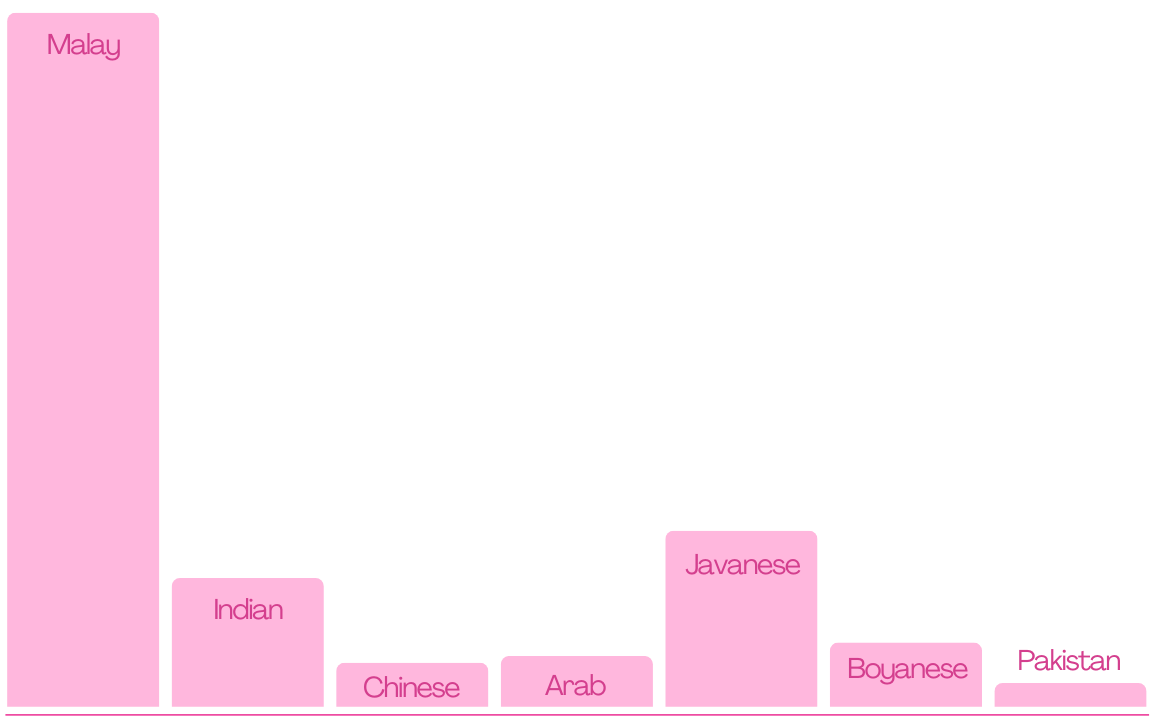
This survey received 360 valid respondents who identified as women and were raised by Muslim families. 78 percent were between the ages of 21 and 40. 57 percent (n=205) of whom are classified as Malay on their identification cards (IC).
Prevalence
According to the findings, the pilot study suggests that the prevalence of FGC among those we surveyed is 76.4 percent (n=275).

Problems With the Current Medicalisation of FGC
The pilot study asked respondents the following questions about their FGC procedures:
- Who performed the procedure?
- What was done?
- What was cut?
- What equipment was used?
47.3 percent (n=130) of respondents who had undergone FGC were cut by doctors. Of these women in this group, 78 respondents could share the extent of their FGC, which ranged from “pricking”, “scraping” and even “surgical removal of tissue”. Others, however, did not know what was done during their procedures.
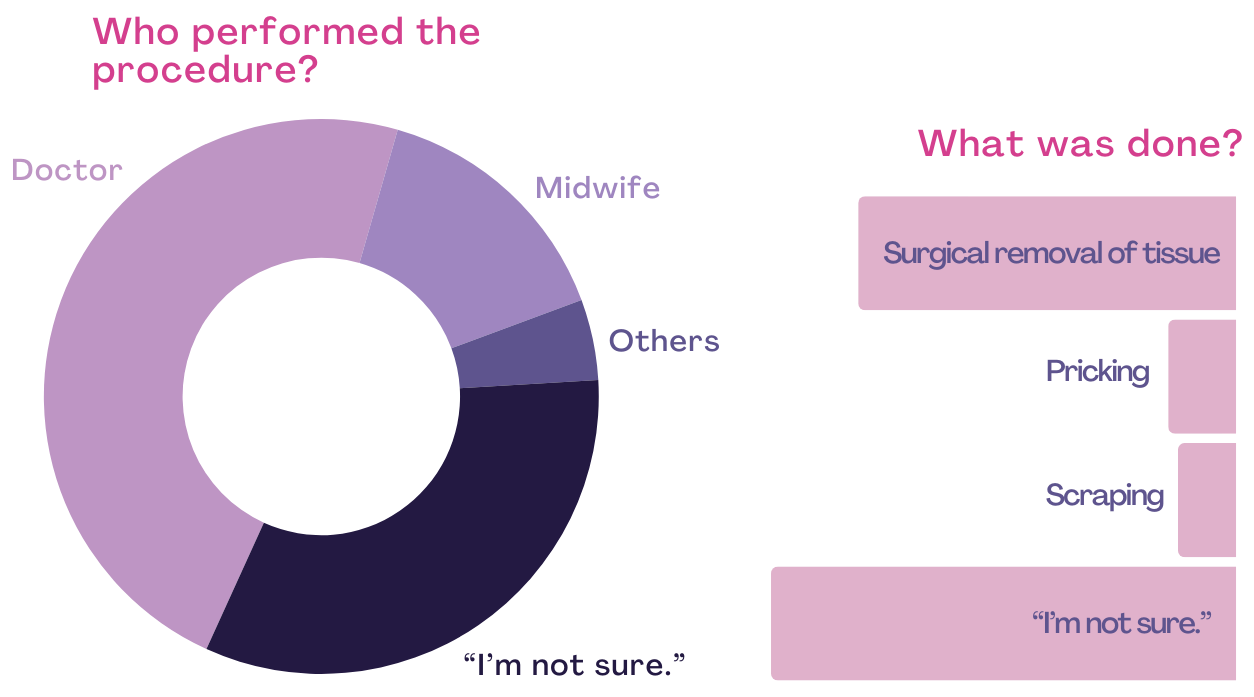
When respondents who underwent FGC at the doctor were asked, “Do you know what was cut?”, 38.4 percent stated the clitoral hood/prepuce or clitoris (Type 1 FGC), with 3 respondents stating even the labia minora or labia majora (Type 2/3 FGC).
There is no clear standard or consistency amongst the general practitioners. These results show that doctors cut using different techniques, with varying severity, on different parts of the vulva, and with a variety of equipment.
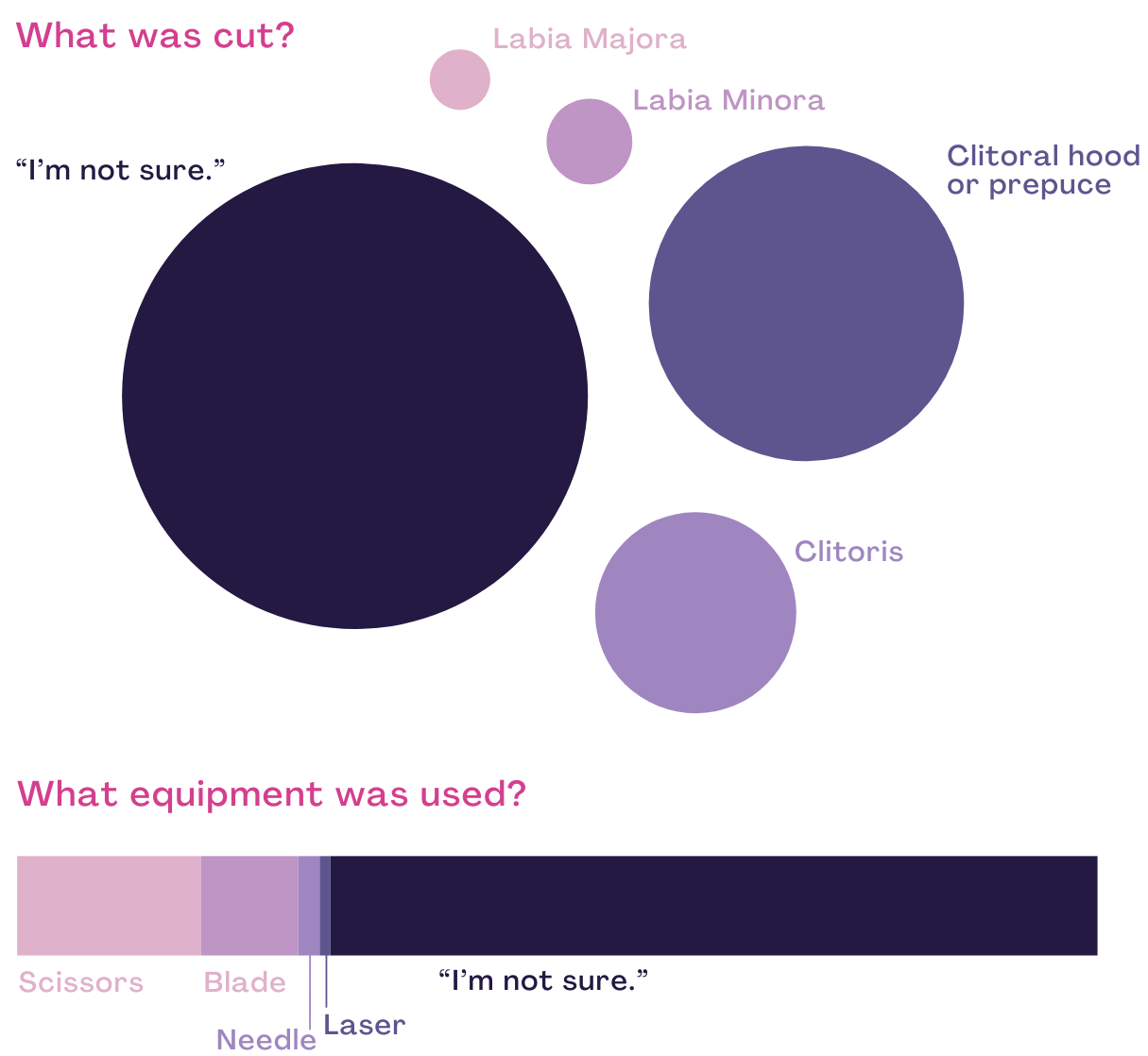
That a baby or child cannot give consent is shown by the significant proportion of respondents who responded “I’m not sure” to most of the questions in the survey (see questions and responses table). This indicates that they have little to no idea as to whether something was removed or modified on their bodies, what exactly was done, how it was done, and by whom.
That such procedures are not recorded or documented, although ‘medicalised’, is concerning as well.
It is especially troubling that caregivers,
- if they didn't know such information, were not concerned to find out; or
- if they did know such information, were not concerned to retain them or share with their daughters unless asked.
Not having such vital information is not only detrimental to a woman’s cognitive development, but also prevents her from giving an accurate medical history when she becomes sexually active, is pregnant or giving birth.
| Question | 'I'm not sure' responses |
|---|---|
| How old were you when you underwent sunat? | 45.5% |
| Who did the procedure? | 32.7% |
| Do you know what the procedure was like? | 39.9% |
| If surgical cutting or removal, do you know what was cut? | 59% |
| Do you know what equipment was used? | 70.1% |
Recommendations
There are no health benefits, medical requirements, religious, or cultural justifications for FGC. We oppose the medicalisation of FGC and urge doctors not to perform or continue the practice. We understand that changing mindsets and eradicating the practice will take a long time. For this reason, we propose the following three recommendations:
- The Ministry of Health should publicly state that FGC has no medical benefits.
- The Islamic Religious Council of Singapore (MUIS) should publicly state that FGC is not a religious requirement.
- Public education at medical schools, clinics and maternal centres should raise awareness about the harms of FGC.